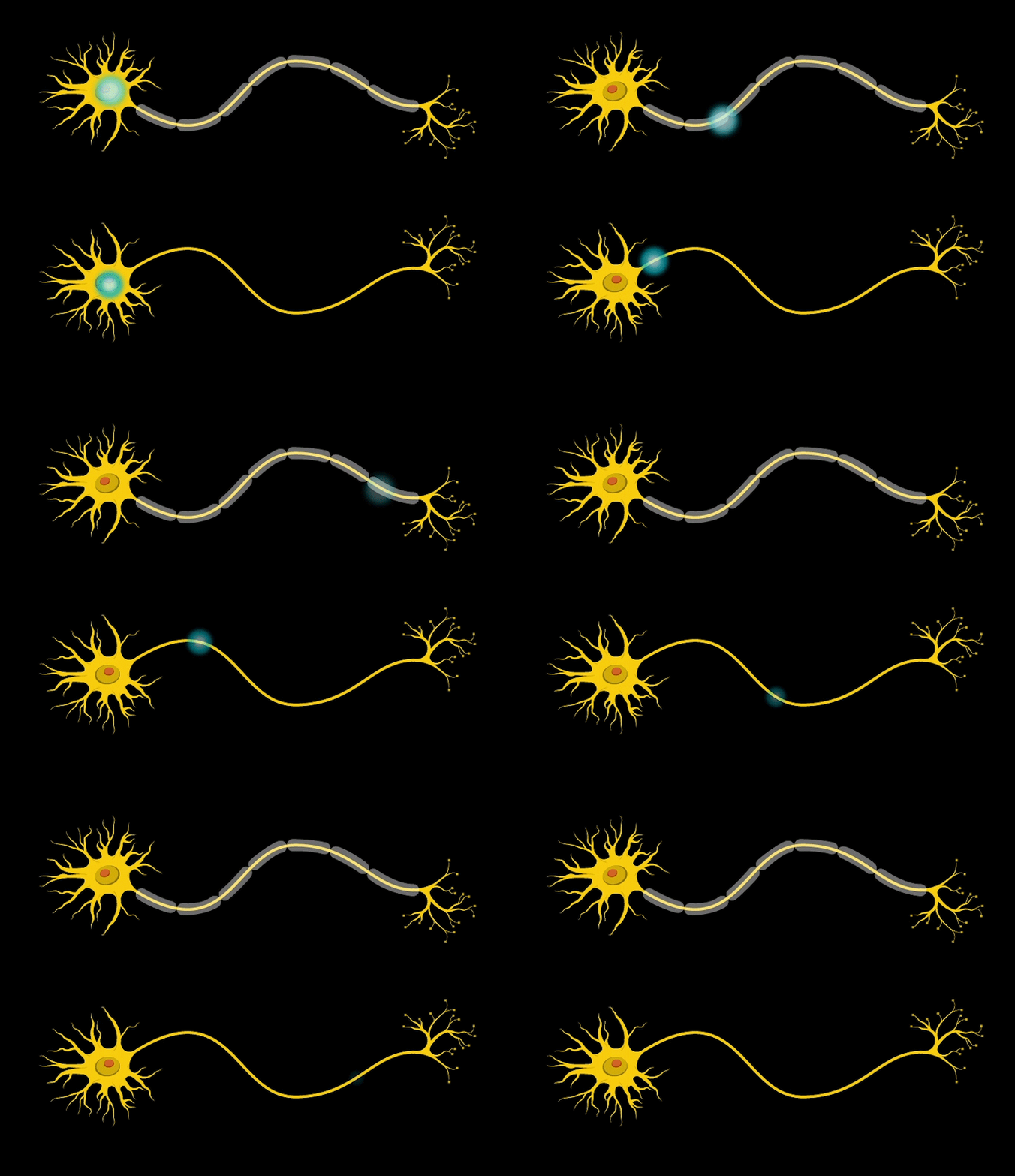
Friday, December 5, 2025

4.2 Introduction to Signal Transduction continued


Today's Learning Objective(s):

·       Describe the components of a signal transduction pathway.

·       Describe the role of components of a signal transduction pathway in producing a cellular response.

#

Tasks:

1

Quizlet Live – Cell Communication      
Let’s try using the new vocabulary.


2

Notes > Cell Signaling


Let’s review the notes.


3

Exploring Various Pathways


Pathways, Beneath the membrane (Cold Spring Harbor Laboratory)  Animation 1

Pathways, At the cell surface (Cold Spring Harbor Laboratory) Animation 2


4

Checkpoint > Cell Signaling


Try the worksheet.


5

Cell Communication – Wayground


Complete the homework.


Homework

 ✅ Cell Communication Wayground

✅Checkpoint Signal Transduction WS

MCQs 4.2


Upcoming Assessments

12/11/25 Quiz: Cell Communication

12/16/25 Quiz: Feedback

12/19/25 Quiz: Cell Cycle

12/22/25 Test: Cell Communication & Cell Cycle


Calendar Notes

12/24/25 – 1/4/26 Winter Break

1/5/26 School Resumes (unit 5 start)
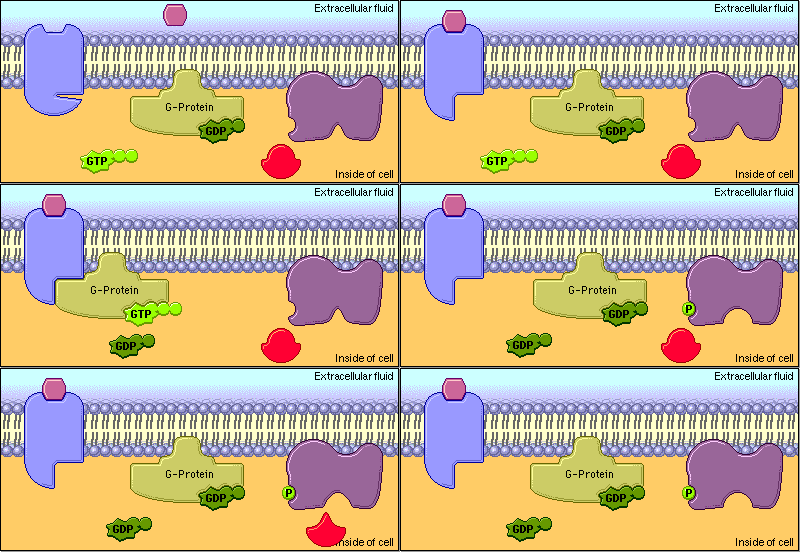
Thursday, December 4, 2025

4.2 Introduction to Signal Transduction


Today's Learning Objective(s):

·       Describe the components of a signal transduction pathway.

·       Describe the role of components of a signal transduction pathway in producing a cellular response.

#

Tasks:

1

Quizlet Cell Communication        
Practice the concepts from class this week.

Not for a grade.


2

Video: Signaling Pathway

Amoeba Sisters > Cell Signaling


Amoeba Sisters > Cell Signaling


3

Reading and Note-Taking

9.2 Propagation of the Signal & 9.3 Response to the Signal - Compete the packet.


The textbook does not include a section on cell signaling. This is an important topic in unit 4. We will use an online college text called Open Stax AP Biology.


9.2 Propagation of the Signal

9.3 Response to the Signal


4

Poster: Ligands


You are assigned a ligand (signal molecule). You will


research its properties, identify the signaling mechanism and range, and produce a simple flow chart showing how the signal is produced, transmitted, received, and the cellular response. Due end of the week. 


See details on the document.


Homework

📕Read Open Stax 9.3

📺Daily Video 4.2

Quizlet Review

 ✅Poster: Ligands

 ✅Checkpoint Signal Transduction WS


Upcoming Assessments

12/11/25 Quiz: Cell Communication

12/16/25 Quiz: Feedback

12/19/25 Quiz: Cell Cycle

12/22/25 Test: Cell Communication & Cell Cycle


Calendar Notes

12/24/25 – 1/4/26 Winter Break

1/5/26 School Resumes (unit 5 start)
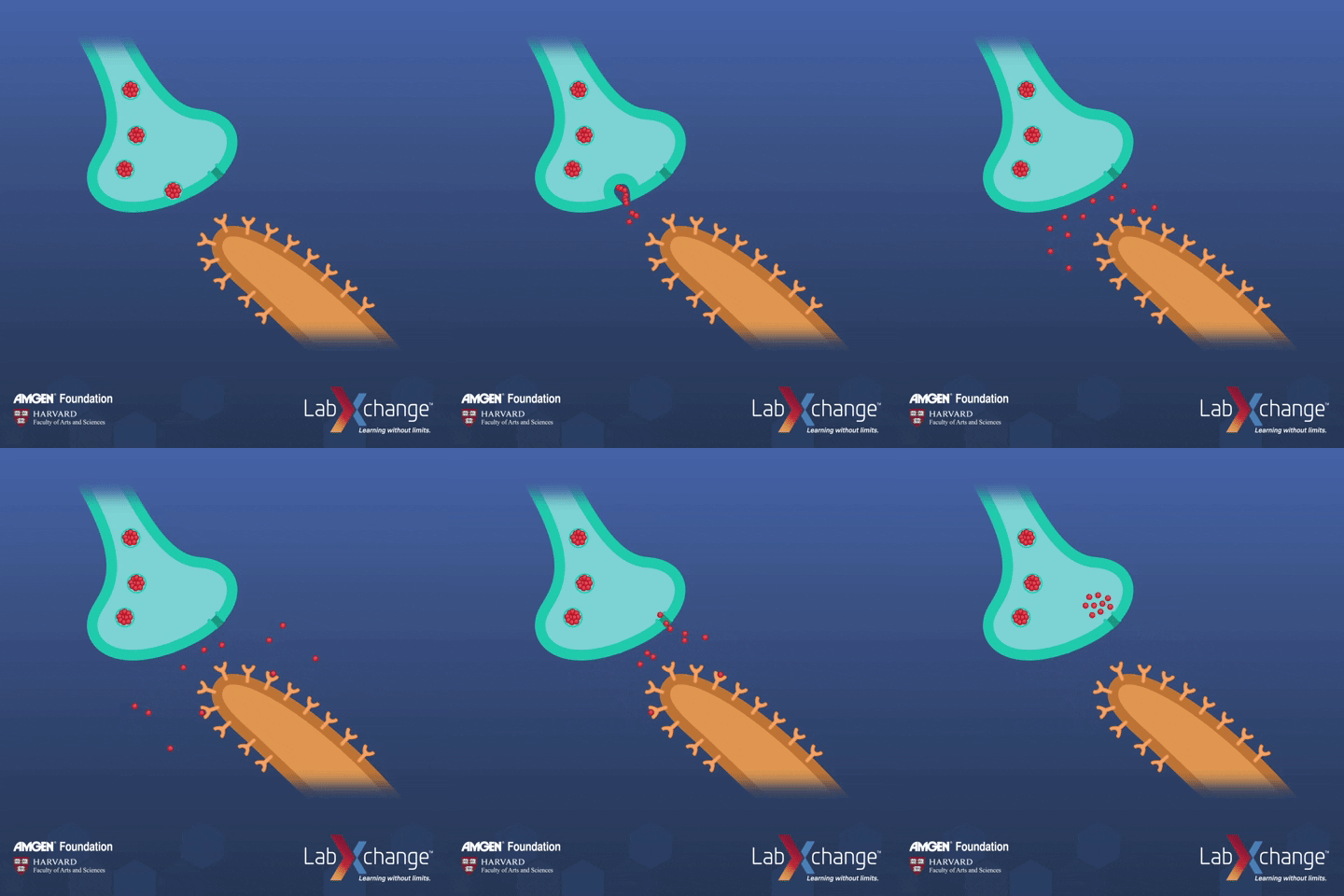

Wednesday, December 3, 2025

4.1 Cell Communication continued

Neurotransmitters, Serotonin, and Paracrine Signaling 


Today's Learning Objective(s):

·  Describe the ways that cells can communicate with one another.

·  Explain how cells communicate with one another over short and long distances

#

Tasks:

1

Game of Telephone

You are to get a message from the teacher. They are to relay the message through the class

2

OK GO Rube Goldberg Machine

You are to watch the video. How is the Rube Goldberg machine functioning similar to the game telephone? Where might there have been failure points in the machine before the perfect run? 


3

Notes > Immune System and Cell Communication

“What ways do the cells of the immune system communicate with each other?” Focus on the immune response. How are the actions of the cells like the game telephone and a Rube Goldberg machine?


4

T-Cell Immune Response

You are to receive an example T cell response. You are to review the schematic for familiar cell structures and functions. Then, let’s connect it to the cell communication and signaling in unit 4.


5

Card Sort – Types of Cell Signaling

Groups, you are to sort the scenarios into the four types of cell signaling.


6

Notes > Cell Communication

Let’s go over the details.


7

Poster: Ligands

You are assigned a ligand (signal molecule). You will

research its properties, identify the signaling mechanism and range, and produce a simple flow chart showing how the signal is produced, transmitted, received, and the cellular response. Due end of the week.  


See details on the document.

8

Google Form Practice 

https://forms.gle/wmm1r8W859vWDQVGA


Homework

📕Read Open Stax 9.2

MCQs 4.1


Upcoming Assessments

12/11/25 Quiz: Cell Communication

12/16/25 Quiz: Feedback

12/19/25 Quiz: Cell Cycle

12/22/25 Test: Cell Communication & Cell Cycle


Calendar Notes

12/24/25 – 1/4/26 Winter Break

1/5/26 School Resumes (unit 5 start)
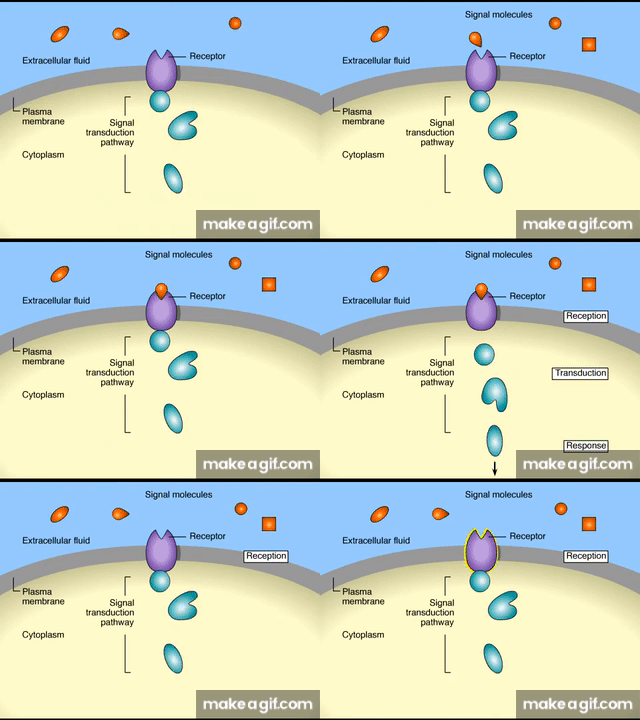

Tuesday, December 2, 2025

4.1 Cell Communication


Today's Learning Objective(s):

·  Describe the ways that cells can communicate with one another.

·  Explain how cells communicate with one another over short and long distances

#

Tasks:

1

Padlet Activity to help with my attendance!

 Padlet 

What is your favorite season? Why?  

2

Updates on Test Grades


·  Corrections

·  Bonus applied for work in AP Classroom


3

Reading and Note-Taking

Cell Signaling


The textbook does not include a section on cell signaling. This is an important topic in unit 4. We will use an online college text called Open Stax AP Biology.


Chapter 9.1 Signaling Molecules and Cellular Receptors


Note-taking added to Google Classroom


-    This would be a printed set of notes. Complete the document and I will print your version to add to your AP Biology binders.


Homework

📕Read Open Stax 9.1 

📺Daily Video 4.1

Quizlet Review


Upcoming Assessments

12/11/25 Quiz: Cell Communication

12/16/25 Quiz: Feedback

12/19/25 Quiz: Cell Cycle

12/22/25 Test: Cell Communication & Cell Cycle


Calendar Notes

12/24/25 – 1/4/26 Winter Break

1/5/26 School Resumes (unit 5 start)


#

Tasks:

L
A
B

Lab: Enzyme Function – Lactose Action


PART A – Lactose, Lactase, and Glucose Testing

Testing lactase enzyme and production of glucose


Complete Table 3.


PART B – Yeast consumption of Different Sugars

Testing for the ability of yeast to metabolize sugars


Complete Tables 5., 6., 7.


PART C – Lab Report

See the instructions to the lab report.


Homework

Lab: Enzyme Function

Quizlet - Enzymes


Upcoming Assessments

11/7/25 Quiz: Enzymes November (study guide)

11/17/25 Quiz: Energy in Living Organism & Photosynthesis (study guide)

11/20/25 Quiz: Cellular Respiration (study guide)


The laws of thermodynamics state that energy cannot be created or destroyed, and each transfer results in a loss of usable energy (entropy). Identify the source of energy for dehydration synthesis in the diagram. Explain why this source is used for the energy transfer.