Friday, January 9, 2026

5.3 Mendelian Genetics


Learning Objective(s):

Explain the inheritance of genes and traits as described by Mendel’s laws.

#

Tasks:

1

Quiz: Meiosis and Sexual Reproduction


Complete the quiz!


Part B When available, complete the practical modeling.


2

Finish - Mendel’s Laws of Inheritance

Try the sample problems in the blue packet from yesterday.

3

Mendel’s Laws of Inheritance

You are to look up the three laws that govern Mendelian genetics

4

NOTES > Mendel’s Genetics


DNA and RNA are carriers of genetic information. Ribosomes are found in all forms of life. Major features of the genetic code are shared by all modern living systems. Core metabolic pathways are conserved across all currently recognized domains. Mendel’s laws of segregation and independent assortment can be applied to genes that are on different chromosomes. Fertilization involves the fusion of two haploid gametes, restoring the diploid number of chromosomes and increasing genetic variation in populations by creating new combinations of alleles in the zygote— a. Rules of probability can be applied to analyze passage of single-gene traits from parent to offspring. b. The pattern of inheritance monohybrid, dihybrid, sex-linked, and genetically linked genes) can often be predicted from data, including pedigree, that give the parent genotype/phenotype and the offspring genotypes/phenotypes.


4

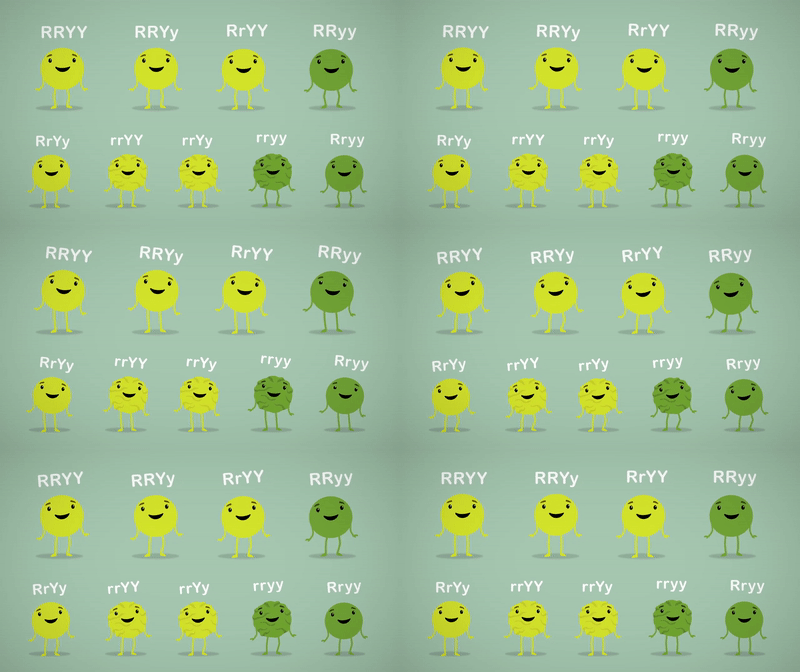
Exploring Heredity and Probability Students are to use Punnett squares to investigate patterns of Mendelian Inheritance.

5

Solutions Review – Exploring Heredity & Probability The whole class reviews the solutions for the problems on the worksheet.

Homework

Video 5.3.1

Wayground > Meiosis & Sexual Reproduction


Upcoming Assessments

1/9/26 Quiz: Meiosis & Sexual Reproduction

1/15/26 Quiz: Patterns of Heredity

1/20/26 Test: Heredity (05)


Calendar Notes

January 13, 2026 – No School (MLK, Jr. Day)

January 21, 2026 – End Semester 1 / Q2 Grading Period
Thursday, January 8, 2026

5.3 Mendelian Genetics


Today's Learning Objective(s):

Explain the inheritance of genes and traits as described by Mendel’s laws.

#

Tasks:

1

Video – Crash Course Biology Genetics Found and Lost

2

Discuss 

What didn't Mendel know that we now know about heredity?

What is the connection to chromosomes?


3

Mendel’s Laws of Inheritance

You are to look up the three laws that govern Mendelian genetics

4

NOTES > Mendel’s Genetics


DNA and RNA are carriers of genetic information. Ribosomes are found in all forms of life. Major features of the genetic code are shared by all modern living systems. Core metabolic pathways are conserved across all currently recognized domains. Mendel’s laws of segregation and independent assortment can be applied to genes that are on different chromosomes. Fertilization involves the fusion of two haploid gametes, restoring the diploid number of chromosomes and increasing genetic variation in populations by creating new combinations of alleles in the zygote— a. Rules of probability can be applied to analyze passage of single-gene traits from parent to offspring. b. The pattern of inheritance monohybrid, dihybrid, sex-linked, and genetically linked genes) can often be predicted from data, including pedigree, that give the parent genotype/phenotype and the offspring genotypes/phenotypes.


4

Exploring Heredity and Probability Students are to use Punnett squares to investigate patterns of Mendelian Inheritance.

5

Solutions Review – Exploring Heredity & Probability The whole class reviews the solutions for the problems on the worksheet.

Homework

Quiz Study Guide

Video 5.3.1

Wayground > Meiosis & Sexual Reproduction

Upcoming Assessments

1/9/26 Quiz: Meiosis & Sexual Reproduction

1/15/26 Quiz: Patterns of Heredity

1/20/26 Test: Heredity (05)


Calendar Notes

January 13, 2026 – No School (MLK, Jr. Day)

January 21, 2026 – End Semester 1 / Q2 Grading Period

Wednesday, January 7, 2026

5.2 Meiosis and Genetic Diversity continued


Today's Learning Objective(s):

Explain how the process of meiosis generates genetic diversity.

#

Tasks:

1

Quizlet Live - Meiosis

Practice new vocabulary    

2

Crash Course Biology


3

Meiosis Review Questions   
You will receive review questions. Write responses to the questions.

4

NOTES > Genetic Diversity and Chromosome Variation

Segregation, independent assortment of chromosomes, and fertilization result in genetic variation in populations. The chromosomal basis of inheritance provides an understanding of the pattern of transmission of genes from parent to offspring. Certain human genetic disorders can be attributed to the inheritance of a single affected or mutated allele or specific chromosomal changes, such as nondisjunction. Some traits result from non-nuclear inheritance

a. Chloroplasts and mitochondria are randomly assorted to gametes and daughter cells; thus, traits determined by chloroplast and mitochondrial DNA do not follow simple Mendelian rules.

b. In animals, mitochondria are transmitted by the egg and not by sperm; as such, traits determined by the mitochondrial DNA are maternally inherited.

c. In plants, mitochondria and chloroplasts are transmitted in the ovule and not in the pollen; as such, mitochondria-determined and chloroplast-determined traits are maternally inherited.


4

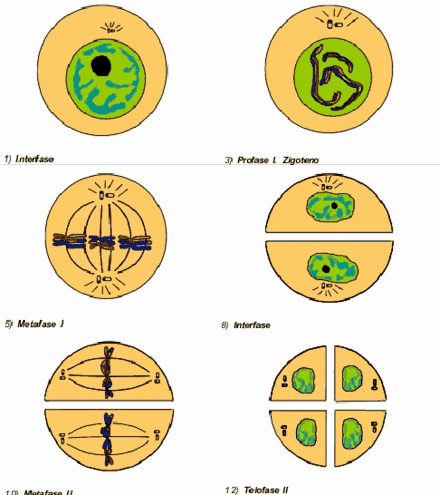
Practice – Modeling Meiosis and Genetic Recombination  You are to practice in preparation for the practical quiz.

5

AP Classroom Multiple Choice Questions

6

Checkpoint > Meiosis  due today

Homework

Video 5.2.3

MCQ 5.2 

Wayground > Meiosis & Sexual Reproduction

Upcoming Assessments

1/9/26 Quiz: Meiosis & Sexual Reproduction

1/15/26 Quiz: Patterns of Heredity

1/20/26 Test: Heredity (05)


Calendar Notes

January 13, 2026 – No School (MLK, Jr. Day)

January 21, 2026 – End Semester 1 / Q2 Grading Period

Tuesday, January 6, 2026

5.2 Meiosis Genetic Diversity

 Today's Learning Objective(s):


Explain how the process of meiosis generates genetic diversity.

#

Tasks:

1

Quizlet Live - Meiosis

Practice new vocabulary    

2

Modeling Meiosis
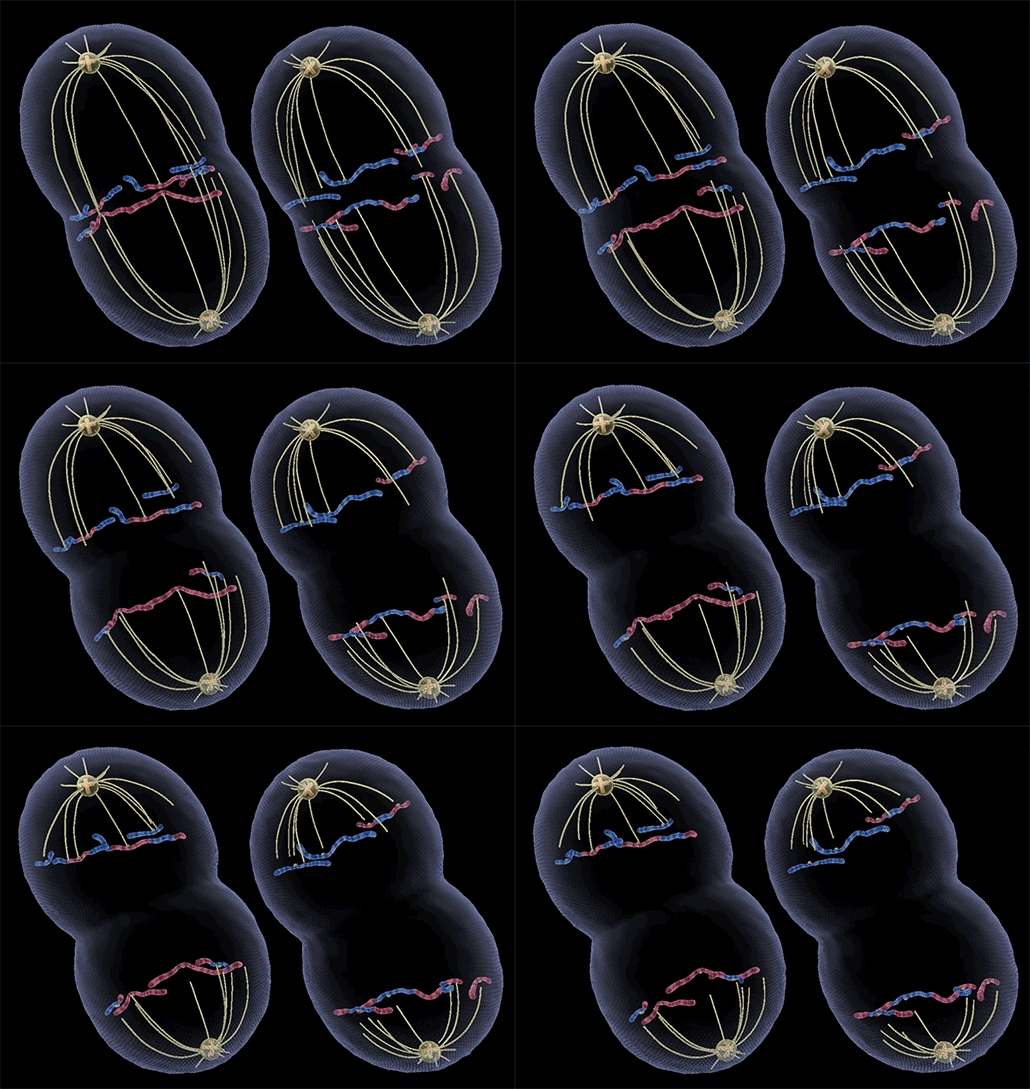
Use the model to show meiosis. How can they manipulate the pieces to show the various event that happen in meiosis. 


3

NOTES > Meiosis


Meiosis is a process that ensures the formation of haploid gamete cells in sexually reproducing diploid organisms—a. Meiosis results in daughter cells with half the number of chromosomes of the parent cell. b. Meiosis involves two rounds of a sequential

series of steps (meiosis I and meiosis II).


Mitosis and meiosis are similar in the way chromosomes segregate but differ in the number of cells produced and the genetic content of the daughter cells.

4

Listing and Connecting

What are means to increasing genetic diversity through meiosis?

5

NOTES  >Genetic Diversity

6

Checkpoint > Meiosis  due Wednesday

Homework

Video 5.2.1 

Video 5.2.2 

Checkpoint > Meiosis

Upcoming Assessments

1/9/26 Quiz: Meiosis & Sexual Reproduction

1/15/26 Quiz: Patterns of Heredity

1/20/26 Test: Heredity (05)


Calendar Notes

January 13, 2026 – No School (MLK, Jr. Day)

January 21, 2026 – End Semester 1 / Q2 Grading Period

Monday, January 5, 2026

5.1 Meiosis


Today's Learning Objective(s):

  Explain how meiosis results in the transmission of chromosomes from one generation to the next

Describe similarities and/ or differences between the phases and outcomes of mitosis and meiosis. 


#

Tasks:

1

Diagram: Meiosis v. Mitosis


2

Foldout Activity: Meiosis  


3

Checkpoint > Meiosis  due Wednesday

Homework

Video 5.1 

MCQ 5.1 

Checkpoint > Meiosis