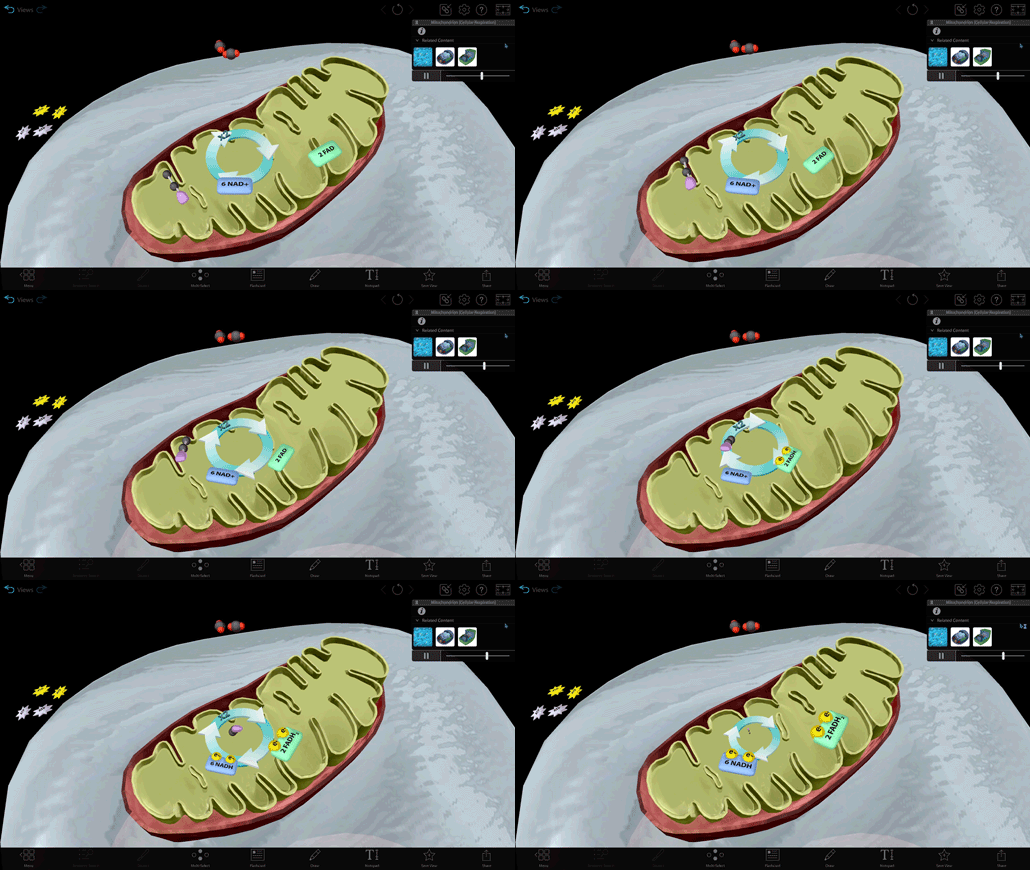
Today's
Learning Objective(s):
· Describe the processes and structural features of mitochondria that allow organisms to use energy stored in biological macromolecules.
· Explain how cells obtain energy from biological macromolecules in order to power cellular functions.
|
# |
Tasks: |
|
1 |
Video: Cellular Respiration |
|
2 |
Cellular
Respiration Overview Review
the overall process of respiration using PowerPoint. |
|
3 |
Modeling thermodynamics and reactions in Cellular
Respiration You and a small group are to use a large printout
and they are to determine the impact of energy (heat) and parts of the
following (labeling) endergonic, exergonic, catabolic, anabolic, oxidation
and reduction. |
|
4 |
Teacher
Notes > Cellular Respiration Use slides
to go over glycolysis, pyruvate breakdown, citric acid cycle (aka Krebs) and
ETC. |
|
5 |
Checkpoint Questions What is the difference between
anaerobic and aerobic respiration? Why do you think aerobic respiration is an
evolutionary adaptation to this process?
See the assignment on Google Classroom. |
Homework
✅ Lab: Photosynthesis (Mon)
Read & Study Textbook 8.2 &
8.3
Upcoming
Assessments
1/20/25 Quiz:
Cellular Respiration (study guide)
11/22/25 Test:
Cellular Energetics – unit 3 (study guide)
Calendar Notes
11/26/25 – 12/1/25
Thanksgiving Break
12/2/25 School Resumes (unit 4
start)